
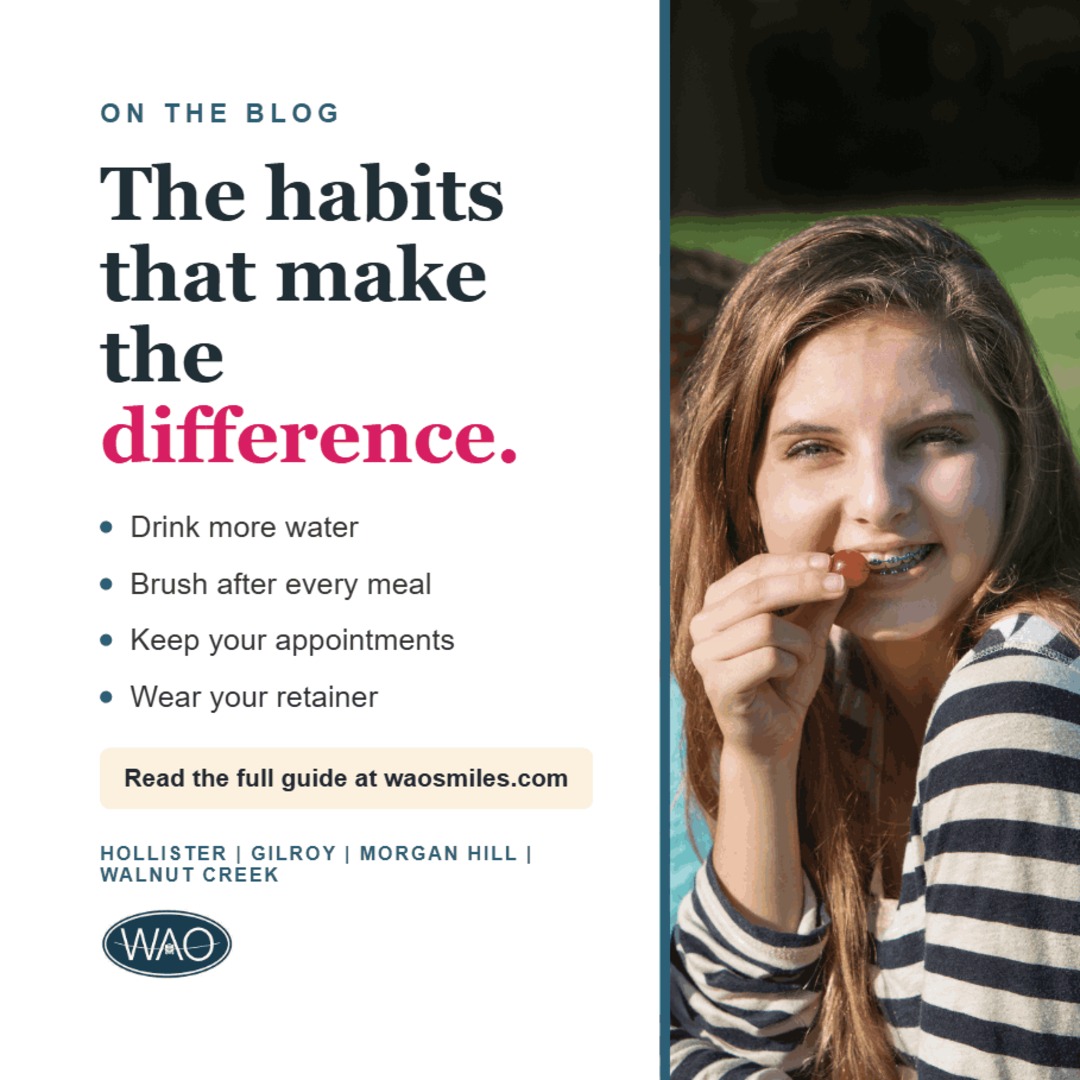
Every patient who walks into one of our offices — whether in Hollister, Gilroy, Morgan Hill, or Walnut Creek — starts treatment with the same goal: a healthy, confident smile. But the results you achieve depend as much on what you do between appointments as what happens in our chairs.
The habits you build now are what carry your treatment forward. And August, with its back-to-school energy and fresh-start feeling, is one of the best times to build or rebuild those routines. Here is a straightforward look at what matters most.
Hydration: The Simplest Thing You Can Do for Your Smile
Water does more for your oral health than most people realize. It rinses the mouth of food particles and bacteria, keeps gums hydrated, and supports the overall health of the tissues that surround your teeth — tissues that are working alongside your orthodontic treatment the entire time.
For patients in braces or aligners, staying hydrated is especially important because dry mouth creates conditions where bacteria thrive more easily. Make water the default drink of the school day, and save juices, sports drinks, and sodas for occasional treats, not daily habits.
Brushing and Flossing: The Habits That Cannot Slip
Orthodontic treatment creates more surfaces for food to get trapped. That makes brushing and flossing after every meal — not just twice a day — the real standard during treatment. We know that’s a commitment, especially for busy students. But the alternative is a longer treatment time, increased risk of white spot lesions, and gum issues that can delay progress.
For braces wearers, a floss threader or orthodontic flosser makes the job faster and easier. For aligner patients, brushing before reinserting trays after eating is non-negotiable — trapping food and sugary residue against the teeth for hours at a time is how cavities happen.
Fresh Breath Is a Sign of a Healthy Mouth
August 6 is National Fresh Breath Day — and it’s a good reminder that fresh breath isn’t just a social consideration. It’s a signal of oral health. Consistent flossing, tongue brushing, staying hydrated, and keeping retainers clean all contribute to it.
If you or your child are noticing persistent bad breath despite good brushing habits, mention it at your next visit. It can sometimes point to something worth checking — and it’s always easier to address early.
Eating Smart Protects More Than Your Brackets
The food choices that are good for your braces are also, generally, good for your overall health. Fresh fruit, soft proteins, dairy, cooked vegetables — these are foods that nourish the body and are gentle on orthodontic appliances. The foods most likely to damage braces — hard, sticky, crunchy snacks — are also the ones with the least nutritional value.
Think of it as a built-in motivation to eat well. Your smile will show the results of both good habits and less-than-great ones, which is a powerful incentive for patients who are old enough to understand what’s at stake.
Every Visit Matters
Patients sometimes assume that if everything looks fine and nothing feels wrong, it’s okay to push off a scheduled adjustment. In most cases, that’s not true. Orthodontic treatment works on a timeline, and each appointment moves the plan forward in specific, coordinated ways. Missing appointments — even just delaying them by several weeks — can affect the sequence of tooth movement and extend treatment.
The best approach is to schedule your next appointment before you leave each visit, and to prioritize keeping those appointments even when life gets busy. If a conflict comes up, call us as soon as possible to reschedule rather than waiting.
Reviews and Referrals: How You Help Other Families
Every family who has found their way to Wafelbakker Anderson Orthodontics because of a friend’s recommendation or a review online matters to us. Word of mouth is the most meaningful endorsement we can receive, and it directly helps other families in our communities find quality care.
If your family has had a great experience, leaving a review on Google or Yelp — or simply sharing your child’s smile story with someone who is considering treatment — is genuinely appreciated. As a thank you, we select one patient each month for a special prize.
FREQUENTLY ASKED QUESTIONS
Orthodontic Habits and Healthy Smiles
How often should my child brush with braces?
After every meal and snack, plus before bed. That’s the standard during orthodontic treatment. Bracket surfaces and the spaces beneath wires are prime spots for plaque to accumulate, and twice-a-day brushing simply isn’t enough to keep up with it during treatment.
My child keeps forgetting to wear their retainer. What can we do?
Routine is everything with retainer compliance. Placing the retainer case somewhere visible — on the nightstand or next to the toothbrush — helps. A phone reminder set for the same time each night can also help. If the retainer no longer fits comfortably, call us right away rather than forcing it in. Teeth can shift surprisingly quickly.
Are there snacks you’d recommend for braces patients who want something satisfying?
Absolutely. Cheese and soft crackers, yogurt with soft granola, smoothies, banana slices with nut butter, soft-cooked edamame, and hummus with soft pita all work well. Blueberries are a personal favorite — they’re full of antioxidants, support gum health, and are gentle on brackets. Pair them with cheese or yogurt for a snack that actually satisfies.
My teenager’s breath has gotten worse since getting braces. Is that normal?
It can happen, particularly if brushing and flossing habits aren’t consistent. More surfaces in the mouth mean more places for bacteria to accumulate. The solution is thorough brushing after meals, daily flossing with a threader or orthodontic flosser, tongue brushing, and staying well hydrated. If the issue persists with good hygiene habits in place, mention it at your next appointment.
Does drinking water with aligners in do any damage?
Plain water is the only beverage that’s safe to consume while wearing aligners. Even sparkling water is fine. Anything else — juice, coffee, tea, sports drinks — should wait until the aligners are out. Sugar and acid trapped against the teeth by a tray is one of the fastest ways to develop cavities during aligner treatment.
How do I know if my child’s treatment is on track?
The best indicator is consistent attendance at scheduled appointments and compliance with the home care routine. If you have specific questions about where your child is in treatment, ask us at the next visit — we’re always happy to walk through the plan and show you what progress looks like.
We have offices across four locations. Do we have to stay with the same one?
Not necessarily. We can often accommodate patients across our Hollister, Gilroy, Morgan Hill, and Walnut Creek locations depending on availability and what makes sense for your family. Call any of our offices and we’ll help you find the most convenient option.